
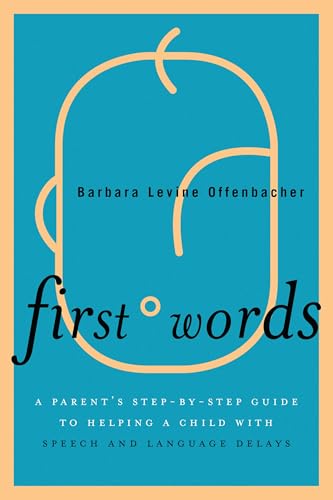
First words : a parent's step-by-step guide to helping a child with speech and language delays / Barbara Levine Offenbacher ; [all illustrations by Kinga Domitrz].
Material type: TextPublication details: Lanham : Rowman & Littlefield Publishers, c2013.Description: xiv, 227 p. : ill. ; 24 cmISBN:
 - 9781442211230 (paper : alk. paper)
- 618.928 55 OFF 23
- RJ496.S7 O34 2013
| Cover image | Item type | Current library | Home library | Collection | Shelving location | Call number | Materials specified | Vol info | URL | Copy number | Status | Notes | Date due | Barcode | Item holds | Item hold queue priority | Course reserves | |
|---|---|---|---|---|---|---|---|---|---|---|---|---|---|---|---|---|---|---|
| Stack text books | All India Institute of Speech and Hearing | 101/1 | 618.928 55 OFF (Browse shelf(Opens below)) | Available | 22214 |
Includes bibliographical references (p. 217-220) and index.
Part I: Typical Speech and Language Development and Disorder
Introduction: Why Are You Reading This Book?
The Book's Goal
Becoming ProActive
Chapter 1: My Child is Not Speaking
Diagnosis
Chapter 2: Fussy Babies
Five Stories
Trust Your Instincts
Signs of Autism: The Check List
Chapter 3: The Developmental Process
Sounds
Socialization and Making Sounds
Socialization and the Voice
Early Sounds Early Communication
How Do Babies Discover Sounds?
Chapter 4: Speech Language and Mother Tongue- The Communication Process
What is Speech?
What is Language?
What is Mother Tongue?
How is Speech and Language Meaningful
How do Children Learn this Complex Task?
How do They Do It?
What is Universal Grammar?
Chapter 5: Language Development Through Experience
Chapter 6: My Delayed 3 Year Old, Where Do I Begin?
Chapter 7: The Stages of Language Acquisition
Early Language Acquisition
Later Language Acquisition
Experience to Language
What Kinds of Experiences
How Do Children Learn Words?
How Does Experience Help Children Learn?
Organizing Words into Categories
Grammar Rules and Language for Single Words
Chapter 8: Two Words
Exchanging Ideas
Word Combinations and Grammar
Chapter 9: Period of Imbalance: Understanding and Speaking
Is Your Child Developing Like Jane and Jake?
Chapter 10: Learning, Memory, and Attention
Early Memory
Short Term Memory
Rehearsal
Attention and Memory
ASD and Attention
ASD and Memory
Biochemical/Neurological Disturbance
ASD and Visual Attention Memory
ASD and Generalized and Rote Memory
Inconsistency with ASD and Memory
Math and Memory
Chapter 11: Auditory Processing Disorder
ASD and Auditory Processing Disorder
Perseveration: Unconventional Verbal Behavior
Echolalia: Unconventional Verbal Behavior
Language Processing Chart
Processing Words for Understanding
Analysis of the Wh Words
Chapter 12: Ways to Speak to your Child with a Processing Disorder
Chapter 13: Social Language
ASD and Pragmatic Language
Pragmatic Language: How it Impacts on High Functioning Children With ASD
Why Don't Kids Play With Me
Understanding Feelings
Chapter 14: Asperger Syndrome
When Is Asperger Syndrome Diagnosed?
What Happens After 3 Years Old?
Perseveration
Missing the Cues: The Social Failure
Chapter 15: How The Brain Works
Theory of Mind TOM
Executive Function Disorder EFD
Summary
Part II: Working With Your Child
Introduction
Chapter 16: Parent Power: How to Be a Pro Active Parent
Observing Your Child's Peers
Inclusion Play
Pre-School Years
Chapter 17: Setting Up the Home Environment
The Home Learning Center
Your Home Play Learning Center
Sample Home Center Diagram
Themes for Your Home Play Center
Chapter 18: How Toys Contribute to Language Development
Building Vocabulary Beyond Toys
Chapter 19: How to Design and Use Your Home Play Learning Center
Turning a Negative Experience into a Learning Experience
Chapter 20: Supplies
Chapter 21: Accountability
Chapter 22: Personally Preparing for the Challenge
The 10 Step Prep
Parent Meditation
Part III: Sounds to Words: Techniques to Stimulate Speech Language and Socialization
Chapter 23: Helping Your Non-Verbal Child
Chapter 24: Non Verbal Language
50 Meaningful Non-Verbal Actions
Chapter 25: Signing
70 Important Signs Using American Sign Language ASL
Checklist for ASL
Chapter 26: Stimulating Speech Sounds
Child Apraxia of Speech CAS
The English Speech Sound Checklist
Conducting a Sound Inventory
Chapter 27: Sounds that Have Meaning
25 Simple Repetitive Sounds Your Child Should Know
Chapter 28: Stimulating a Single Word Vocabulary
Category 1: 25 First Toy Words
Category 2: 25 First Food Words
Category 3: 10 First Words for Drinks
Category 4: 30 First Community Worker Words
Category 5: 30 First Transportation Words
Category 6: 35 First Location/Place Words
Category 7: 30 First Body Part Words
Category 8: 45 First Clothing Words
Category 9: 25 First Sports Words
Category 10: 25 First Color and Shape Words
Category 11: 25 First Weather and Season Words
Category 12: 50 First Time Words
Category 13: 50 First Action Words- Verbs
Category 14: 24 First Preposition Words
Category 15: 40 First Descriptive Words-Adjectives
Category 16: 15 First Farm Words
Category 17: 15 First Pronoun Words
Category 18: 30 First Fruit and Vegetable Words
Category 19: 45 First Animal Words
Category 20: 25 First Farm and Country Words
Category 21: 20 First City Words
Category 22: 15 First Entertainment Words
Category 23: 20 First School Words
Category 24: 15 First Personal Hygiene Words
Category 25: 15 First Furniture/Furnishing Words
Category 26: 25 First Popular Children's Characters
Category 27: 25 First Kitchen/Serving Words
Chapter 29: Activity Worksheet for Single Word Development
Summary
Part IV. Verbatim Samples of Spectrum Language Disorders
Introduction
Chapter 30: Why Are Verbatim Transcriptions So Important?
Chapter 31: Case History: Justin 4.3-4.10 years old
Chapter 32: Transcriptions for Justin
32. 1 The Birthday Cake: Justin 4.3 years old
32. 2 The Cook: Justin 4.3 years old
32. 3 The Alligator: Justin 4.3 years old
32. 4 Alligator Eggs: Justin 4.3 years old
32. 5 A Conversation About a Rainy Day: Justin 4.4 years old
32. 6 Going Shopping: Justin 4.5 years old
32. 7 The Dishwasher: Justin 4.5 years old
32.8 The Dishwasher-A Follow-Up Justin 4.10 years old
32.9 The Refrigerator: Justin 4.5 years old
32.10 The Refrigerator-A Follow-Up Justin 4.10 years old
Summary
Part V. How to Naturally Advance Your Child's Language Development
Without Missing Valuable Opportunities
Introduction
Chapter 33: Why Is This Relevant?
Chapter 34: Missed Opportunities
Chapter 35: Gullo and Gullo- An Ecological Approach
Chapter 36: An Ecological Language Experience
Chapter 37: The Picture Time Schedule
There are no comments on this title.