
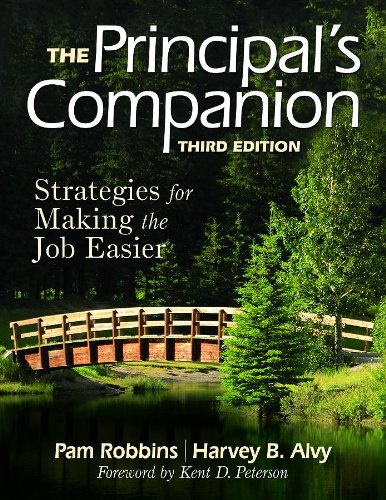
The principal's companion : strategies for making the job easier / Pam Robbins, Harvey B. Alvy ; foreword by Kent D. Peterson.
Material type: TextPublication details: Thousand Oaks, Calif. : Corwin Press, 2009.Edition: 3rd edDescription: xix, 251 p. : ill. ; 28 cmISBN:
 - 9781412965491 (cloth)
- 371.2/012 ROB A 22
- LB2831.92 .R63 2009
| Cover image | Item type | Current library | Home library | Collection | Shelving location | Call number | Materials specified | Vol info | URL | Copy number | Status | Notes | Date due | Barcode | Item holds | Item hold queue priority | Course reserves | |
|---|---|---|---|---|---|---|---|---|---|---|---|---|---|---|---|---|---|---|
| Stack text books | All India Institute of Speech and Hearing | 16/1 | 371.2/012 ROB A (Browse shelf(Opens below)) | Available | 18019 |
Includes bibliographical references (p. 269-244) and index.
Foreword by Kent D. Peterson
Preface
Acknowledgments
About the Authors
Part I. The Principal's Many Roles
1. Leader as Learner
Principal as Lifelong Learner
Learning in Many Contexts
The School as a Powerful Context for Learning
A Global Perspective
When Old and New Ideas Converge
2. Leader as Manager
Good Leadership Requires Effective Management
Management Responsibilities and Strategies
Crisis Management Planning
A Final Observation Regarding School Management
3. Leader as Shaper of School Culture
Core Beliefs and Values Are the Heart of Culture
The Physical Environment Reflects Core Values
Rituals Display Core Values and Call Attention to What Is Important
Celebrations Call Attention to What Is Important
How People Spend Time Reflects Core Values
Norms Are the Unwritten Rules of Culture
Powerful Stories Communicate and Reinforce Cultural Values
Reading, Transforming, or Shaping a Culture
Final Thoughts on Culture
Part II. Critical Skills for Effective Leadership
4. The Art of Human Relations: Getting the Job Done
Task and Relationship Behaviors
Differentiated Support
Personality Styles
Recommendations for Skillful Human Relations
The Role of Emotions in the Organization: Remembering the Heart
5. Managing Time
Brevity, Fragmentation, and Variety
Techniques for Time Management
Managing Bifocally
Multi-Tasking: A Modern Day Solution or Hazard?
Final Thoughts on Using Time
6. Effectively Working With the Central Office and Other Schools: Forging Success Through Collaboration
Caught in the Middle
How Is the School District Governed?
Communication Between the School and the Central Office
Management Tips for Working With the Central Office
Maintaining a Strong Relationship Between the Central Office and the School
Forging a School and Central Office Partnership: Putting Staff and Student Learning First
Part III. Honoring the School's Mission
7. Understanding, Planning, and Implementing Change
Change Brings Loss and Resistance
Influencing Individuals and the Institution
Building Trust for Successful Change
Conflict Can Contribute to Positive Change
Strategies to Promote Trust
Classical Insights Regarding Change and Continuous Improvement
Three Phases of Change
A Look at Change From the Individual's Perspective
Stages of Concern
Some Final Thoughts on Change
8. Building a Vision and a Mission Together
Why Have a School Vision and Mission?
School Activities That Highlight the Mission
Joint Administrative and Faculty Mission Statement
Mission-Building Activity
Developing Yearly School Improvement Goals to Accomplish the Mission
Part IV. Working Together to Build a Learning Organization
9. Enhancing Teacher Growth Through Supervision and Evaluation Practices Designed to Promote Student Learning
Issues and Dilemmas
Essential Ingredients for Successful Supervision
Effective Instructional Strategies
Brain-Compatible Teaching Practices
Increasing Teacher and Administrative Reflection Through Clinical Supervision
Tips for Conferencing and Observing
Walkthroughs, Snapshots, or Drive-Bys
Guidelines Related to Evaluation and Legal Concerns
Final Thoughts on Supervision and Evaluation
10. Maximizing Feedback About Teaching: Differentiated Professional Growth Options
Reflections on Feedback
Moving Toward Collaborative Feedback
Differentiated Professional Growth Options: How the System Works
Sources of Feedback: Categories and Approaches
Self-Assessment: Establishing Benchmarks of Progress
Individual Reflection and Institutional Renewal
11. Building a Collaborative School: The Power of Teacher Leadership and Community
Portrait of a Collaborative School: The Professional Learning Community
An Image of Reality
The Case for Collaboration
Moving Toward Collaboration
Necessary Conditions for a Collaborative School
A Spectrum of Activities
Teacher Leadership and the Collaborative School
The Principal and Collaboration
Some Final Thoughts on Collaboration
12. Fueling the Learning Organization Through Professional Development
Why Professional Development?
Professional Development Defined
Creating an Atmosphere for Professional Development to Thrive: Some Guidelines
Planning a Peer-Coaching Program
Facilitating the Individual's Professional Development Experience
The Big Picture
13. Faculty Meetings: A Tool for Capacity Building
Faculty Meetings as Learning Opportunities
The School Mission and Faculty Meetings
Increasing the Teachers' Roles in Faculty Meetings
Some Successful Faculty Meeting Strategies
A Final Thought
14. Asking the Right Questions About Curriculum, Instruction, and Assessment: Getting to Know the C.I.A.
Keeping the Curriculum Relevant
Asking the Right Questions
Continuing the Curriculum Discussion
Part V. Starting Effectively and Staying the Course
15. First Days of School
Logistical Concerns
Beginning-of-the-Year Faculty Meetings Set a Tone
Departmental and Grade-Level Meetings
Orienting Teachers Who Are New to the School
Teacher Time in the Classroom
Welcoming Students and Parents
Be Visible on the First Days of School
16. Tips: Ideas That Work and Align With the School's Mission
Organizing Your Time
Making Record Keeping Easier
Additional Helpful Ideas to Stay On Task
Tips on Using Technology to Enhance a Principal's Performance
Providing Experiences to Celebrate the School's Culture
Tips on Opening a New School
Practical Guidelines for Preparing Printed Materials for Internal and External School Community Members
Using Tips in Your Setting
Part VI. Understanding Your Constituencies
17. Working With Parents and Partnering With the Greater Community
Effectively Communicating With Parents
Building Bridges With the Parent Community
Additional Ways to Bring Parents and Community Members Into School
Broadening School Support and Partnerships
Community-Based Organizations
Seeking School Support Through Educational Grants
Reaching Out and Working With the Media
A Reflection on Partnering With Parents and the Community
18. Making a Difference for Students: The Heart of the School
Social Justice and the Challenge of Excellence and Equality
"Those Kids" and Their Stories
The Right to Be a Child and to Make Mistakes
Maximizing Opportunities for Students With Disabilities
Structuring Student Success
Discipline Guidelines
Effective Classroom Management: Handling Disciplinary Problems
Reducing Bullying Behavior
Cyberbullying and Social Responsibility
The High School Dropout Crisis
Student and Teacher Resiliency
Final Thoughts on "Those Kids"
Part VII. The Principal's Professional and Personal Worlds
19. The Newcomer to the Principalship
Problems That Challenge New Principals
A Profile of the New Principal
Helping Prospective and New Principals Make the Grade
Practical Suggestions for Newcomers
Final Thoughts on the Newcomer Experience
20. Taking Care of Yourself
The Selfish Nature of Martyrdom
Taking Control of Your Schedule to Care for Yourself
A Personal Mission Statement
Gaining Perspective by Spending Time With Students
Body and Mind: Healthy and Ill Together
Maintaining Institutional and Individual Balance
21. Keeping the Professional Candle Lit
Institutionalizing Professional Growth Activities
Reflection as a Tool
A Principal's Portfolio
Other Growth Opportunities
22. Reflections on the Principalship
Serving the School Community
Where Do We Go From Here?
The Good School
Take Time to Smell the Roses
References and Additional Readings
Index
There are no comments on this title.