
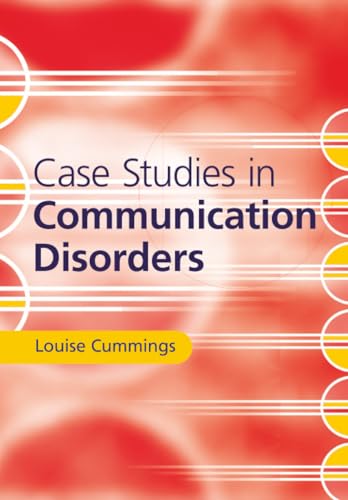
Case studies in communication disorders / Louise Cummings, Professor of Linguistics, School of Arts and Humanities, Nottingham Trent University.
Material type: TextPublisher: Cambridge : Cambridge University Press, 2016Copyright date: ©2016Description: xiii, 511 pages ; 25 cmContent type:
 - text
- unmediated
- volume
- 9781316608388 (pbk)
- 1316608387 (pbk)
- 616.855 CUM
- RC423 .C85 2016
| Cover image | Item type | Current library | Home library | Collection | Shelving location | Call number | Materials specified | Vol info | URL | Copy number | Status | Notes | Date due | Barcode | Item holds | Item hold queue priority | Course reserves | |
|---|---|---|---|---|---|---|---|---|---|---|---|---|---|---|---|---|---|---|
| Stack text books | All India Institute of Speech and Hearing | 58/1 | 616.855 CUM (Browse shelf(Opens below)) | Checked out to Sangeetha M (1031) | 21/07/2026 | 21371 |
Case study 45 Girl aged 8 years with selective mutism
Includes bibliographical references (pages 469-504) and index.
Contents; List of figures; Preface; Acknowledgements; Section A Speech disorders; Case study 1 Girl aged 6 years with cleft palate; Case study 2 Girl aged 3; 8 years with Kabuki make-up syndrome; Case study 3 Girl aged 13 years with developmental dysarthria; Case study 4 Boy with developmental apraxia of speech; Case study 5 Total glossectomy in a man aged 69 years; Case study 6 Man aged 39 years with stroke-induced dysarthria; Case study 7 Man aged 35 years with Wilson's disease; Case study 8 Man aged 71 years with apraxia of speech
Case study 9 Woman aged 32 years with foreign accent syndromeSection B Language disorders; Case study 10 Boy aged 7 years with developmental phonological disorder; Case study 11 Portuguese-speaking girl aged 7 years with phonological disorder; Case study 12 Boy aged 4; 8 years with specific language impairment; Case study 13 Boy with pragmatic language impairment; Case study 14 Swedish-speaking girl with pragmatic language impairment; Case study 15 Man aged 47 years with developmental dyslexia; Case study 16 Boy aged 5; 6 years with FG syndrome; Case study 17 Boy with Floating-Harbor syndrome
Case study 18 Woman aged 28 years with autismCase study 19 Girl with Sturge-Weber syndrome; Case study 20 Man aged 47 years with temporal lobe epilepsy; Case study 21 Girl aged 10 years with traumatic brain injury; Case study 22 Girl aged 9; 11 years with right cerebellar tumour; Case study 23 Woman with post-irradiation speech and language disorder; Case study 24 Woman aged 66 years with Wernicke's aphasia; Case study 25 Woman aged 41 years with Broca's aphasia; Case study 26 Man with stroke-induced Broca's aphasia; Case study 27 Man aged 41 years with non-fluent aphasia
Case study 28 Man aged 60 years with right hemisphere damageCase study 29 Man aged 24 years with closed head injury; Case study 30 Woman aged 87 years with early-stage Alzheimer's disease; Case study 31 Man aged 36 years with AIDS dementia complex; Case study 32 Man aged 76 years with Parkinson's disease; Case study 33 Man aged 37 years with Huntington's disease; Section C Fluency disorders; Case study 34 Boy aged 4 years with developmental stuttering; Case study 35 Man aged 29 years with acquired stuttering; Case study 36 Boy with developmental cluttering; Section D Voice disorders
Case study 37 Man aged 51 years with contact granulomaCase study 38 Woman aged 50 years with psychogenic dysphonia; Case study 39 Man aged 62 years with laryngeal carcinoma; Case study 40 Male-to-female transgender adolescent aged 15 years; Section E Hearing disorders; Case study 41 Boy aged 19 months with Goldenhar syndrome; Case study 42 Woman aged 49 years with congenital sensorineural hearing loss; Case study 43 Boy aged 4 months with cochlear implants; Case study 44 Girl aged 11 years with central auditory processing disorder; Section F Psychiatric disorders
Designed for students of speech-language pathology, audiology and clinical linguistics, this valuable text introduces students to all aspects of the assessment, diagnosis and treatment of clients with developmental and acquired communication disorders through a series of structured case studies. Each case study includes questions which direct readers to important features of the case that will facilitate clinical learning. A selection of further readings encourages students to extend their knowledge of communication disorders. Key features of this book include: 48 detailed case studies based on actual clients with communication disorders; 25 questions within each case study; Fully-worked answers to every question; 105 suggestions for further reading. The text also develops knowledge of the epidemiology, aetiology, and linguistic and cognitive features of communication disorders, highlights salient aspects of client histories, and examines assessments and interventions used in the management of clients-- Source other than the Library of Congress.
There are no comments on this title.