
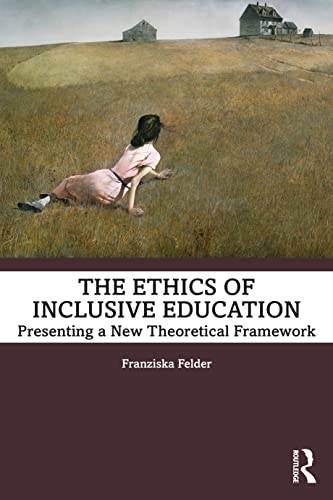
The ethics of inclusive education : presenting a new theoretical framework / Franziska Felder.
Material type: TextPublisher: Abingdon, Oxon ; New York, NY : Routledge, 2022Description: 244 pagesContent type:
 - text
- unmediated
- volume
- 9781032117492
- 371.904 6 FEL 23
| Cover image | Item type | Current library | Home library | Collection | Shelving location | Call number | Materials specified | Vol info | URL | Copy number | Status | Notes | Date due | Barcode | Item holds | Item hold queue priority | Course reserves | |
|---|---|---|---|---|---|---|---|---|---|---|---|---|---|---|---|---|---|---|
| Reference text books | All India Institute of Speech and Hearing | R-11/5 | 371.904 6 FEL (Browse shelf(Opens below)) | Available | 23231 |
Includes bibliographical references and index.
Introduction
The Fenty Story
The missing social dimension in the inclusion debates
The structure of this book
The approach, scope and method
The comparison with slavery
The limits of rights-based approaches
The methodological approach: nonideal theorizing
A brief review of the history of (inclusive) education
The status of disabled people before the eighteenth century
The Age of Enlightenment
Shifting backgrounds and the importance of compulsory education
The rupture of the Second World War and the growing importance of human rights
The emergence of the concept of 'inclusion'
The difficult role of special education today
The concept of inclusion
A confusing plethora of definitions
The strong focus on schools and the lack of a debate on exclusion
Inclusion between description and evaluation
Inclusion as a 'thick concept'
Two camps and the problems associated with them
Inclusion: the proposal
The sociological perspective
The elements of inclusion
The ontogenesis of inclusion in evolutionary biology and individual psychology
Disability
Change of emphasis within the inclusion literature
The 'deconstruction' model
The 'barrier' model
The difference made by disability
The social-relational model
Inclusive education
The current inclusion discourse and its shortcomings
The school as an organisation and institution
School versus family
The functions of school
Values that matter
Step 1: Exclusion
Step 2: The ethical-normative significance of inclusion
Step 3: Inclusion and education
Conclusion: the transformation of education
The shift towards inclusion
Closing remarks
References
"The Ethics of Inclusive Education clarifies the idea of inclusion and its normative content, and presents a coherent theoretical framework for inclusion and inclusive education. It serves as one of the first extended philosophical defenses in the field of inclusive education that goes beyond a simple assertion of educational value. Integrating perspectives from the history, sociology and psychology of inclusive education, this book develops a holistic concept of inclusion, while clearly and systematically examining the ethical-normative content of inclusive education. It also offers - an interdisciplinary analysis of inclusion and inclusive schooling, ranging from historical to sociological analysis of their predecessors and preconditions, to the investigation of their philosophical and educational content, an in-depth analysis of the moral significance of exclusion, the value of inclusion and inclusive education from an analytical point of view, and practice-oriented investigations of the individual and social conditions for inclusion and inclusive education. The Ethics of Inclusive Education serves researchers, practitioners, and politicians, to make key educational decisions about how to understand, explore or realize inclusive educational aims, especially with respect to disability and special needs"-- Provided by publisher.
There are no comments on this title.