
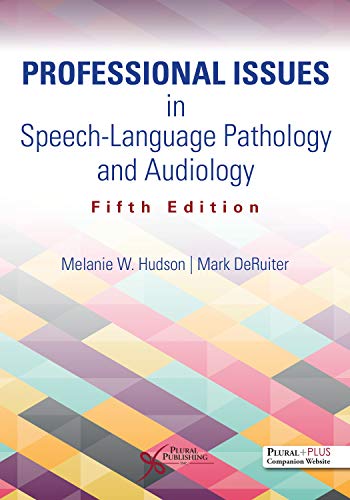
Professional issues in speech-language pathology and audiology / [edited by] Melanie W. Hudson, Mark DeRuiter.
Material type: TextPublisher: San Diego, CA : Plural, [2021]Edition: Fifth editionDescription: xxxvi, 609 pages : illustrations ; 25 cmContent type:
 - text
- unmediated
- volume
- 9781635502206
- 616.855 07 HUD D 23
- RC423 .P763 2021
- WM 475
| Cover image | Item type | Current library | Home library | Collection | Shelving location | Call number | Materials specified | Vol info | URL | Copy number | Status | Notes | Date due | Barcode | Item holds | Item hold queue priority | Course reserves | |
|---|---|---|---|---|---|---|---|---|---|---|---|---|---|---|---|---|---|---|
| Stack text books | All India Institute of Speech and Hearing | 65/2 | 616.855 07 HUD D;2 (Browse shelf(Opens below)) | Available | 22840 | |||||||||||||
| Stack text books | All India Institute of Speech and Hearing | 65/2 | 616.855 07 HUD D;3 (Browse shelf(Opens below)) | Available | 22841 | |||||||||||||
| Reference text books | All India Institute of Speech and Hearing | R-38/3 | 616.855 07 HUD D (Browse shelf(Opens below)) | Available | 22725 | |||||||||||||
| Stack text books | All India Institute of Speech and Hearing | 65/2 | 616.855 07 HUD D;1 (Browse shelf(Opens below)) | Available | 22726 |
Browsing All India Institute of Speech and Hearing shelves,Collection: 65/2 Close shelf browser (Hides shelf browser)

|

|
|
|

|
|
||
| 616.855 06 BRA Speech and language clinical process and practice / | 616.855 07 HUD D;1 Professional issues in speech-language pathology and audiology / | 616.855 07 HUD D;2 Professional issues in speech-language pathology and audiology / | 616.855 07 HUD D;3 Professional issues in speech-language pathology and audiology / | 616.855 07 JOH;2 Medical speech-language pathology across the care continuum : an introduction / | 616.855 07 JOH;3 Medical speech-language pathology across the care continuum : an introduction / |
Includes bibliographical references and index.
Foreword
Preface
About the Editors
Contributors
Table A
Acronyms
Section 1: Overview of the Professions
Chapter 1: Professions for 21st Century
Melanie W. Hudson, MA and Mark DeRuiter, PhD, MBA
Introduction
Trends in Technology and the Digital Revolution
Twenty-First Century Trends and Issues
Summary
Critical Thinking
References
Appendix 1–A. ASHA Scope of Practice in Audiology
Appendix 1–B. ASHA Scope of Practice in Speech-Language Pathology
Chapter 2: Professional Issues: A View from History
Judith Felson Duchan, PhD and Susan Felsenfeld, PhD
Introduction
The Profession’s Organization: 1918 to Toda
Membership and Professional Qualification Requirements: 1926 to Today
Scope of Practice and Practice Frameworks: 1926 to Today
Recent Trends
Summary
Critical Thinking
References
Appendix 2–A. A Few Milestones in the History of Speech-Language Pathology and Audiology in the United States
Chapter 3: Establishing Competencies in Professional Education, Certification, and Licensure
Lissa Power-deFur, PhD
Introduction
How Do You Know You are Competent?
How Can You Demonstrate Your Excellence in a Particular Area of Practice?
State Licensure
How Do You Know Your University Graduate Program Will Ensure You Become Competent?
Summary
Critical Thinking
References
Chapter 4: Professional Organizations
Sue T. Hale, MCD and Fred H. Bess, PhD
Introduction
Practical Dilemmas and Affiliation
How Do Professional Organizations Work?
ASHA: A National Professional Organization for Speech-Language Pathologists and Audiologists
AAA: A National Professional Organization for Audiologists
Related Professional Organizations
State Organizations
Student Organizations
International Professional Organizations
Summary
Critical Thinking
References
Resources
Chapter 5: Professional Ethics
Jaynee A. Handelsman, PhD
Introduction
Standards of Professional Conduct
Conflicts of Interest
The Role of Professional Associations
Ethical Issues in Practice Management
Ethical Issues in Supervision
Ethical Issues in Academia
Ethical Dilemmas
Unethical Practice Complaint Process
Ethics Education
Recent Changes and Future Directions
Summary
Critical Thinking
References
Resources
Appendix 5–A. American Academy of Audiology Code of Ethics
Appendix 5–B. American Speech-Language-Hearing Association Code of Ethics
Chapter 6: Professional Accountability
Shelly S. Chabon, PhD and Becky Sutherland Cornett, PhD
Introduction
Accountable Care
Managing Risks and “Risk Intelligence” for Accountable Clinicians and Organizations
Raising the Bar on Accountability: The Value Equation
A Key Opportunity to Shape the Future of Accountability: Learning Health Systems
Conclusion
Summary
Critical Thinking
References
Chapter 7: International Alliances
Robert M. Augustine, PhD, Tina K. Veale, PhD, and Kelly M. Holland, MEd
Introduction
Definition of an International Alliance
International Alliances Promoting Global Competencies Grounded in Standards of Practice
Types of International Alliances that Promote Global Competence
International Alliances Promoting Global Competencies through the American Speech-Language-Hearing Association and Other National Organizations
International Alliances Promoting Global Competencies through Colleges and Universities
International Immersion Experiences
International Alliances through Service Learning for Practitioners and Students
International Alliances Promoting Global Research for Scholars
Summary
Critical Thinking
References
Appendix 7–A. Proposed Competencies for Global Engagement
Appendix 7–B. An MOU Checklist for International Collaborations
Chapter 8: Applying Evidence to Clinical Practice
Lizabeth H. Finestack, PhD and Stacy K. Betz, PhD
Introduction
Evidence-Based Practice
Evaluating Assessment Evidence
Using Assessment Evidence
Evaluating Intervention Evidence
Using Intervention Evidence: An Example
Summary
Critical Thinking
References
Chapter 9: The Future of Science
Raymond D. Kent, PhD
Introduction
The Research Landscape: Types of Research
Funding for Research
Tensions, Pressures, and Opportunities
Science and Technology
Dissemination: The First Fruits of Research
Research on the Global Stage
Educating the Next Generation of Scientists in CSD
Summary
Critical Thinking
References
Section 2: Employment Issues
Chapter 10: Workforce Issues
Cathy DeRuiter, MA
Introduction
The Current Workforce
ASHA Membership and Affiliation Data
The Future: Factors Affecting Employment
Summary
Critical Thinking
References
Resources
Chapter 11: Finding Employment
Mark DeRuiter, PhD, MBA
Introduction
Employment Settings
Job Search
Resumé
Cover Letter
E-Mail Style Issues
Web-Based ApplicationsLetters
of Recommendation/Verbal References
Interviewing Success
The Anatomy of an Interview
Electronic Interview Formats
Second Interviews
“Forbidden” Interview Questions
Considering the Benefits that Might be Available to You
Salary and Benefits
Receiving the Offer
Making the Decision
Getting Started
Summary
Critical Thinking
References
Resources
Appendix 11–A. Sample Resume
Chapter 12: Building Your Career
Marva Mount, MA and Melanie W. Hudson, MA
Introduction
Your First Year of Clinical Practice
Mentoring
Work Ethic and Professional Code of Ethics
Being Organized
Time Management and Work-Life Balance
Productivity
Teamwork
Politics in the Workplace
Networking
Performance Evaluations
Continuing Education and Advanced Education
Promotion and Advancement
Changing Employment
Summary
Critical Thinking
References
Resources
Internet Sources
Chapter 13: Support Personnel in Audiology and Speech-Language Pathology
Diane Paul, PhD, Tricia Ashby, AuD, Lemmie G. McNeilly, PhD, and Steve Ritch, CRMT
Introduction
Rationale for Use of Support Personnel
Challenges Using Support Personnel
Evolving Professional Policies and Practices
Chronology of Ethical and Professional Practice Policies Related to the Use of Support Personnel by Audiologists and Speech-Language Pathologists
State Regulation
Employment Trends of Support Personnel
Training for Support Personnel
Credentialing Assistants
Supervision of Support Personnel
Job Responsibilities of Support Personnel in Audiology
Job Responsibilities of Support Personnel in Speech-Language Pathology
Reimbursement of Services Provided by Support Personnel
Research Related to Support Personnel
Summary
Critical Thinking
Acknowledgments
Dedication
References
Appendix 13–A. Support Personnel in Communication Sciences and Disorders: Key Word Definitions
Section 3: Setting-Specific Issues
Chapter 14: Healthcare Legislation, Regulation, and Financing
Jeffrey P. Regan, MA
Introduction
Medicare
Medicaid
Private Health Insurance
Coding Systems
Key Health Care Legislative and Regulatory Issues
Summary
Critical Thinking
References
Chapter 15: Service Delivery in Healthcare Settings
Alex Johnson, PhD and Jeffrey Johnson, PhD
Scope of Chapter
Health Care Settings and Key Responsibilities
Routine Considerations for Speech-Language Pathologists and Audiologists in Health Care
Measuring Change, Progress, and Outcomes
Documentation
Supervision of Others
Quality and Compliance with Regulatory Processes
Interprofessional Responsibilities and Competencies
Multicultural Issues and Health Disparities
Health Literacy
Some Future Considerations
Health Reform and Cost Control
Trends in Education for Health Settings
Entry Level and Advanced Degrees for Practice
Telehealth
Summary
Critical Thinking
References
Chapter 16: Education Policy and Service Delivery
Perry Flynn, MEd, Charlette M. Green, MS, and Marie Ireland, MEd
Introduction
Settings and Students: Statistics
Legal Foundations Affecting Services
Education Funding
Roles and Responsibilities in the Schools
The Process of Working in the Schools
Special Issues in School Settings
Audiology Services
Summary
Critical Thinking
References
Resources
Chapter 17: Service Delivery Issues in Early Intervention
Corey Herd Cassidy, PhD
Introduction
What is Early Intervention?
Family-Centered Services
Culturally and Linguistically Responsive Services
Developmentally Supportive Services in the Natural Environment
Comprehensive, Coordinated, and Team-Based Services
Services Based on the Highest Quality of Evidence
Other Considerations for Early Intervention Services in Natural Environments
Summary
Critical Thinking
References
Chapter 18: Service Delivery Issues in Private Practice
Robin L. Edge, PhD
Introduction
Advantages and Disadvantages of a Private Practice
Private Practice Options
Business Plan
Location of Private Practice
Private Practice Credentials and Qualifications
Resources Needed for Private Practice
Payment for Services
Rates for Services
Billing
Outcomes Data for Private Practices
Networking
Summary
Critical Thinking
References
Resources
Chapter 19: Strategically Promoting Access to Speech-Language Pathology and Audiology Services
Brooke Hallowell, PhD
Introduction
Identifying Barriers to Access
Ensuring that Others Understand the Need for Our Services
Optimizing Reimbursement for Clinical Services
Ensuring Alternative Funding Approaches
Advancing Legislation to Improve Access
Advocating for Our Professions
Care Extenders
Expanding Access through Technology
Educating the Public
Adjusting Service-Providing Environments
Summary
Critical Thinking
Acknowledgment
References
Section 4: Working Productively
Chapter 20: Documentation Issues
Barbara J. Moore, EdD
Introduction
General Principles of Documentation
Documentation in Educational Settings
Documentation in Health Care Settings
Documentation in Private Practice and University Clinics
Documentation for Audiological Services
Summary
Critical Thinking
References
Resources
Chapter 21: Developing Leadership Skills
Gail J. Richard, PhD
Introduction
Roles of a Leader
Effective Leadership Skills
Pathways to Leadership
Fiduciary Responsibilities
Summary
Critical Thinking
References
Chapter 22: Safety in Workplace
Cynthia McCormick Richburg, PhD and Donna Fisher Smiley, PhD
Introduction
Regulatory Agencies
Accrediting Agencies
Policies, Procedures, and Trainings
Personal and Environmental Hazards
Infection Control in Clinical and Educational Settings
Confidentiality of Client and Research Participant Information
Summary
Critical Thinking
References
Chapter 23: Overview of Interprofessional Practice and Interprofessional Education
Alex Johnson, PhD
Introduction
Interprofessional Practice
Interprofessional Education (IPE)
National and International Organizations and Resources for IPE and IPCP
Summary
Critical Thinking
References
Chapter 24: Child and Elder Mistreatment
Carolyn Wiles Higdon, EdD
Introduction
Child Abuse and Neglect
Maltreatment and Neglect
Continuum of Abuse and Neglect
Causes and Risks
Munchausen by Proxy
Who Is an Abuser?
Extent of the Problem
Effects of Child Abuse and Neglect
What to Do If You Suspect Abuse
Who Is a Mandated Reporter of Abuse?
Elder Abuse, Neglect, and Exploitation
Summary
Critical Thinking
References
Resources
Websites
Appendix 24–A. Case 1: Joshua
Appendix 24–B. Case 2: Sam
Appendix 24–C. Case 3: Miriam
Chapter 25: Working with Culturally and Linguistically Diverse Populations
Shirley Huang, MS and Pui Fong Kan, PhD
Introduction
Demographic Profiles
Language Difference: Language Characteristics in Typical Bilinguals
Service Delivery for Children and Adults
Systems-Level Constraints Affecting Culturally-Linguistically Diverse Populations
Moving the Field Forward
Summary
Critical Thinking
References
Resources
Internet Resources
Chapter 26: Supervision and Mentoring
Melanie W. Hudson, MA and Mary Sue Fino-Szumski, PhD, MBA
Introduction
A Brief History of Supervision and Mentoring
The Supervisory Process
Supervisory Style and Communication Skills
Transition: Supervisor to Mentor/Preceptor
Regulations, Standards, and Guidelines
Future Needs in Supervision and Mentoring
Summary
Critical Thinking
References
Resources
Chapter 27: Technology for Student Training, Professional Practice, and Service Delivery
Carol C. Dudding, PhD and Susan Ingram, PhD
Introduction
The Digital Revolution
Instruction and Training
Impact on Professional Practice Settings
Service Delivery
Ethical Considerations
Summary
Critical Thinking
References
Resources
Chapter 28: Counseling
Michael Flahive, PhD
Introduction
Historical Context of Counseling in Audiology and Speech-Language Pathology
Linking Counseling to Clinical Practice and Educational Training
Optimizing Information Exchanges
Building Working Relationships: Identifying Our Strengths and Developing Our Skills
Advancing a Conceptual Framework for Addressing Emotional Needs: Personal Adjustment Counseling
Advancing a Conceptual Framework for Addressing Emotional Needs: Positive Psychology Approaches to Personal Adjustment Counseling
Building Working Relationships
Building Our Conceptual Framework
Other Considerations for a Personal Conceptual Framework
Going Forward and Putting It Together
Summary
Critical Thinking
References
Appendix 28–A. Conversational Counseling Tools: Microskills
Appendix 28–B. Counseling and Scopes of Practice
Chapter 29: Stress, Conflict, and Coping in the Workplace
Lisa A. Scott, PhD
Introduction
What Is Stress?
Burnout and Compassion Fatigue
What are the Risks for Experiencing Burnout?
Workplace Conflict
Coping with Stress: The Importance of Self-Care
Summary
Critical Thinking
References
Resources
Chapter 30: Advocacy
Tommie L. Robinson, Jr., PhD and Janet Deppe, MS
Introduction
Definitions
Recognizing the Benefits of Being an Advocate
Advocacy Case Examples
Developing a Game Plan for Advocacy
Resources
Summary
Critical Thinking
References
"The fifth edition of Professional Issues in Speech-Language Pathology and Audiology is a singularly comprehensive resource for students in speech-language pathology and audiology as they prepare for their professional careers. It also serves as a timely source of information for both practitioners and faculty, serving as an updated "state of the professions" desk reference. The book is divided into four major sections: overview of the professions; employment issues; setting-specific issues; and working productively. The information presented in each section provides the reader with a better understanding and a new perspective on how professional issues have been affected by both internal and external influences in recent years including technological advances, demographic shifts, globalization, and economic factors. Chapter authors are recognized subject matter experts, providing a blend of both foundational and cutting-edge information in areas such as evidence-based practice, ethics, finding a job, interprofessional practice, service delivery in healthcare and education, technology, cultural competence, supervision, and leadership"-- Provided by publisher.
There are no comments on this title.