
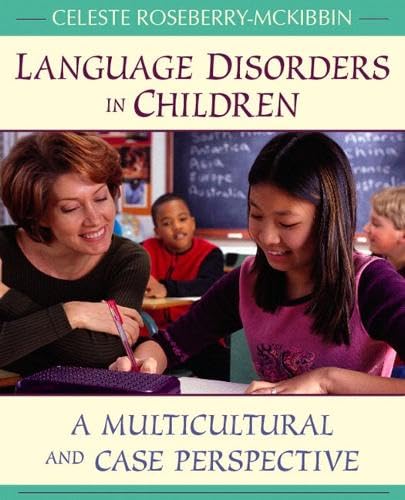
Language disorders in children : a multicultural and case perspective / Celeste Roseberry-McKibbin.
Material type: TextPublication details: Boston : Pearson/Allyn&Bacon, c2007.Description: xxii, 506 p. : ill. ; cmISBN:
 - 0205393403
- 618.928 55 ROS 23
- RJ496.L35 R67 2007
| Cover image | Item type | Current library | Home library | Collection | Shelving location | Call number | Materials specified | Vol info | URL | Copy number | Status | Notes | Date due | Barcode | Item holds | Item hold queue priority | Course reserves | |
|---|---|---|---|---|---|---|---|---|---|---|---|---|---|---|---|---|---|---|
| Reference text books | All India Institute of Speech and Hearing | R-63/1 | 618.928 55 ROS (Browse shelf(Opens below)) | Available | 18040 | |||||||||||||
| Reference text books | All India Institute of Speech and Hearing | R-63/1 | 618.928 55 ROS (Browse shelf(Opens below)) | Available | 14351 | |||||||||||||
| Stack text books | All India Institute of Speech and Hearing | 101/2 | 618.928 55 ROS;3 (Browse shelf(Opens below)) | Available | 18042 | |||||||||||||
| Stack text books | All India Institute of Speech and Hearing | 101/2 | 618.928 55 ROS;2 (Browse shelf(Opens below)) | Available | 18041 | |||||||||||||
| Stack text books | All India Institute of Speech and Hearing | 101/2 | 618.928 55 ROS;4 (Browse shelf(Opens below)) | Available | 18043 | |||||||||||||
| Stack text books | All India Institute of Speech and Hearing | 101/2 | 618.928 55 ROS;5 (Browse shelf(Opens below)) | Available | 18044 |
Includes bibliographical references (p. 466-495) and index.
CHAPTER ONE-INTRODUCTION TO LANGUAGE AND LANGUAGE DISORDERS
PREVIEW OUTLINE
CASE STUDY
INTRODUCTION
Cultural and Linguistic Diversity
Evidence-Based Practice
DEFINITIONS AND TERMINOLOGY
Semantics
Morphology
Syntax
Pragmatics
Phonology
Summary
APPROACHES TO LANGUAGE DISORDERS
Terminology
Models of Language Disorders
General Characteristics of Children with Specific Language Impairment
Summary
LINGUISTIC CHARACTERISTICS OF CHILDREN WITH SPECIFIC LANGUAGE IMPAIRMENT
Semantics
Syntax
Morphology
Pragmatics
Written Language
Summary
PROCESSING CHARACTERISTICS OF CHILDREN WITH SPECIFIC LANGUAGE IMPAIRMENT
Basic Principles
Summary
CHAPTER HIGHLIGHTS
STUDY AND REVIEW QUESTIONS
ANSWERS TO STUDY AND REVIEW QUESTIONS
CHAPTER 2: LANGUAGE DEVELOPMENT IN CHILDREN: A REVIEW
PREVIEW OUTLINE
CASE STUDY
CHAPTER INTRODUCTION
THEORIES OF LANGUAGE DEVELOPMENT
Behaviorial Theory
Nativist Theory
Cognitive Theory
Social Interactionism Theory
Information Processing Theory
Education, Language, and Literacy Development in the School-Age Years
Summary
NORMAL LANGUAGE DEVELOPMENT: DEVELOPMENTAL MILESTONES
The Role of the Environment in Language Development
Traditional Language Development Milestones
Birth to One Year
One to Two Years
Semantics
Syntax
Pragmatics
Two to Three Years
Semantics
Syntax
Morphology
Pragmatics
Three to Four Years
Semantics
Syntax
Morphology
Pragmatics
Four to Five Years
Semantics
Syntax
Morphology
Pragmatics
Five to Six Years
Semantics
Syntax
Morphology
Pragmatics
Six to Seven Years
Semantics
Syntax
Morphology
Pragmatics
Seven to Nine Years
Semantics
Syntax
Morphology
Pragmatics
Education, Language, and Literacy Development in the School-Age Years
Summary
CHAPTER HIGHLIGHTS
STUDY AND REVIEW QUESTIONS
ANSWERS TO STUDY AND REVIEW QUESTIONS
CHAPTER 3: THE IMPACT OF SECOND LANGUAGE ACQUISITION AND BILINGUALISM ON CHILDREN'S DEVELOPING LANGUAGE
PREVIEW OUTLINE
CASE STUDY
CHAPTER INTRODUCTION
LANGUAGE PROFICIENCY IN BILINGUAL CHILDREN
Separate vs. Common Underlying Proficiency
Simultaneous vs. sequential language acquisition
Additive and subtractive bilingualism
Comprehensible input
Developing bilingual language proficiency
Monolingual norm assumption
Bilingual education
Basic Interpersonal Communication Skills and Cognitive-Academic Language Proficiency
Summary
NORMAL PROCESSES OF SECOND LANGUAGE ACQUISITION
Silent period
Language loss
Language transfer
Interlanguage
Codeswitching
Summary
COGNITIVE-LINGUISTIC VARIABLES IN SECOND LANGUAGE ACQUISITION
Use of routines
High vs. low input generators
Practice opportunities
Avoidance
Modeling
Summary
AFFECTIVE VARIABLES IN SECOND LANGUAGE ACQUISITION
Personality
Anxiety level
Motivation
Summary
CHAPTER HIGHLIGHTS
STUDY AND REVIEW QUESTIONS
ANSWERS TO STUDY AND REVIEW QUESTIONS
CHAPTER 4: FACTORS IMPACTING LANGUAGE DEVELOPMENT IN CULTURALLY AND LINGUISTICALLY DIVERSE CHILDREN
PREVIEW OUTLINE
CASE STUDY
INTRODUCTION
CULTURE AND CULTURAL DIVERSITY
Variables Impacting Behavior of Members of Various Cultural Groups
Increasing Cultural Competence
Summary
CONSIDERATIONS IN WORKING WITH STUDENTS FROM IMMIGRANT AND REFUGEE FAMILIES
General Issues
Acculturation
Considerations in Working with Internationally Adopted Children
Summary
IMPACT OF RELIGIOUS AND CULTURAL BELIEFS ON SERVICE DELIVERY
Beliefs about Causes of Disabilities
Beliefs about Treatment for Disabilities
Summary
WORKING WITH STUDENTS WHO SPEAK AFRICAN AMERICAN ENGLISH
General Considerations
Characteristics of Communication
Summary
WORKING WITH STUDENTS WHO SPEAK SPANISH-INFLUENCED ENGLISH
General Considerations
Characteristics of Communication
Summary
WORKING WITH STUDENTS WHO SPEAK ENGLISH INFLUENCED BY ASIAN LANGUAGES
General Considerations
Characteristics of Communication
Summary
CHAPTER HIGHLIGHTS
STUDY AND REVIEW QUESTIONS
ANSWERS TO STUDY AND REVIEW QUESTIONS
CHAPTER 5: ASSESSMENT OF CHILDREN WITH LANGUAGE IMPAIRMENTS: BASIC PRINCIPLES
PREVIEW OUTLINE
CASE STUDY
INTRODUCTION
PRELIMINARY COMPONENTS OF ASSESSMENT
Screening
Case History
The Pre-Evaluation Process
Summary
THE USE OF STANDARDIZED TESTS
Definitions
Test Validity
Test Reliability
Potential Misuses of Standardized Tests
Summary
CONSIDERATIONS IN USING STANDARDIZED TESTS WITH CLD STUDENTS
Formal Test Assumptions
Sources of Bias in the use of Standardized Tests with CLD Students
Modifying Standardized Tests for use with CLD Students
Summary
LANGUAGE SAMPLES
Introduction
Strategies for Collecting Language Samples
Informal Strategies for Evaluating Morphology and Syntax
Informal Evaluation of Language Use
Summary
OTHER ALTERNATIVES TO STANDARDIZED ASSESSMENT
Introduction
Legal Considerations in the Assessment of CLD Students
Dynamic Assessment
Assessment of Information Processing Skills
Assessment of Narrative Skills
Portfolio Assessment
Use of Interpreters in the Assessment of CLD Students
Summary
CLD STUDENTS: LANGUAGE DIFFERENCE OR LANGUAGE IMPAIRMENT?
Introduction
Diagnostic Pie
Summary
CHAPTER HIGHLIGHTS
STUDY AND REVIEW QUESTIONS
CHAPTER 6: INTERVENTION FOR CHILDREN WITH LANGUAGE IMPAIRMENTS: GENERAL PRINCIPLES AND STRATEGIES
PREVIEW OUTLINE
CASE STUDY
GENERAL PRINCIPLES OF INTERVENTION FOR CHILDREN WITH LANGUAGE IMPAIRMENTS
Purposes of Intervention
Basic Approaches to Language Intervention
Structure of Therapy Sessions
Using Reinforcement in Language Therapy
Schedules of Reinforcement
Summary
SPECIFIC TREATMENT TECHNIQUES
Incidental Teaching
Focused Stimulation
Self-Talk
Parallel Talk
Expansion
Extension
Mand-Model
Recasting
Joint Routines
Joint Book Reading
Whole Language
Using Sabotage
Modifying Linguistic Input
Summary
FACILITATING GENERALIZATION OF TREATMENT TARGETS TO OTHER SETTINGS
Introduction
Connecting with Significant Others: General Principles
Suggestions for Working with Caretakers
Suggestions for Working with Classroom Teachers
Summary
SPECIAL CONSIDERATIONS FOR CLD CHILDREN WITH LANGUAGE IMPAIRMENTS
Language of Intervention
Program Placement Alternatives
Incorporating Multiculturalism into Treatment Activities
Suggestions for Therapy with CLD Students with LI
Involving the Families of CLD Students with LI
Summary
CHAPTER HIGHLIGHTS
STUDY AND REVIEW QUESTIONS
ANSWERS TO STUDY AND REVIEW QUESTIONS
CHAPTER 7: LANGUAGE IMPAIRMENT IN TODDLERS AND PRESCHOOLERS
PREVIEW OUTLINE
INTRODUCTION
Background Facts
Established Risk Factors for Developing Language Impairment
Conditions that put Children at Risk for Developing Language Impairment
Summary
CHARACTERISTICS OF TODDLERS AND PRESCHOOLERS WITH LANGUAGE IMPAIRMENTS
Precursors of Language Development
Linguistic Characteristics of Young Children with Language Impairments
Late Talkers
Summary
ASSESSMENT OF TODDLERS AND PRESCHOOLERS WITH LANGUAGE IMPAIRMENTS
General Principles
Strategies for Evaluating Language Skills
Summary
INTERVENTION FOR TODDLERS AND PRESCHOOLERS WITH LANGUAGE IMPAIRMENT
General Principles
Indirect Intervention: Working with Caregivers and Teachers
Increasing Oral Language Skills: Direct Intervention Techniques
Increasing Emergent Literacy Skills: Direct Intervention Techniques
Serving Toddlers and Preschoolers in the Public School Setting
Summary
ADDITIONAL CONSIDERATIONS FOR CLD CHILDREN AND THEIR FAMILIES
Working with Families
Serving CLD Children with Language Impairments in Day Care and Preschool Settings
Summary
CHAPTER HIGHLIGHTS
STUDY AND REVIEW QUESTIONS
ANSWERS TO STUDY AND REVIEW QUESTIONS
CHAPTER 8 LANGUAGE IN SCHOOL-AGED STUDENTS AND ADOLESCENTS WITH LEARNING DISABILITIES
PREVIEW OUTLINE
CASE STUDY
CHAPTER INTRODUCTION
Learning Disability: Definition, Identification, and Characteristics
Oral and Written Language: The Relationship
Federal Laws Impacting Service Delivery to Students with Learning Disabilities
ORAL COMMUNICATION PROBLEMS OF STUDENTS WITH LEARNING DISABILITIES
Pragmatic Skills
Narrative Skills
Semantic Skills
Grammatical Skills
Summary
WRITTEN LANGUAGE PROBLEMS IN CHILDREN WITH LEARNING DISABILITIES
Reading Disabilities (Dyslexia)
General Facts
Visual-Perceptual/Motor Theories
Deficits in Phonological Processing
Writing Disabilities
Spelling Disabilities
Summary
ASSESSMENT OF STUDENTS WITH LEARNING DISABILITIES
Challenges in Nonbiased Assessment
Principles of Nonbiased Assessment
Summary
INTERVENTION FOR SCHOOL-AGED CHILDREN AND ADOLESCENTS WITH LEARNING DISABILITIES
Service Delivery in the Public Schools
Collaboration in the General Education Classroom
Specific Strategies for Teaching Students with Learning Disabilities
Basic Principles
Providing Support for Written Language Skills
Additional Considerations for CLD Students
Summary
CHAPTER HIGHLIGHTS
STUDY AND REVIEW QUESTIONS
ANSWERS TO STUDY AND REVIEW QUESTIONS
CHAPTER 9: LANGUAGE IN CHILDREN WITH
DEVELOPMENTAL DISABILITIES
PREVIEW OUTLINE
CASE STUDY
INTRODUCTION
MENTAL RETARDATION: DEFINITION AND CAUSES
Definition and Classifications
Causes of MR
Summary
COGNITIVE AND LINGUISTIC CHARACTERISTICS OF STUDENTS WITH MENTAL RETARDATION
The Relationship Between Language and Cognition
Cognitive and Processing Characteristics of Children with MR
Language Characteristics of Children with MR
Phonological Characteristics
Morphological and Syntactic Characteristics
Semantic Characteristics
Pragmatic Characteristics
Children with Down Syndrome
Summary
AUTISM SPECTRUM DISORDER: DEFINITION AND CAUSES
Definition
Causes of ASD
Summary
BEHAVIORAL, COGNITIVE, AND LINGUISTIC CHARACTERISTICS OF STUDENTS WITH AUTISM SPECTRUM DISORDERS
Theory of Mind
Behavioral Characteristics
Phonological Characteristics
Morphological and Syntactic Characteristics
Semantic Characteristics
Pragmatic Characteristics
Written Language Characteristics
Summary
FOUNDATIONAL PRINCIPLES OF ASSESSMENT
Basic Principles
Parent Interview and Case History
Specific Considerations in the Assessment of Children with ASD and/or MR
Summary
FOUNDATIONAL PRINCIPLES OF TREATMENT
General Principles
Utilizing Principles of Behaviorism
Reinforcement
Generalization
Written Language
Practical Techniques and Strategies for Increasing Language Skills
Inclusion in General Education Classrooms
Training Social Skills
Training Attention and Listening Skills
Students with Severe Deficits
Supports for Children with ASD and MR
Considerations for Working with CLD Students and Their Families
Summary
CHAPTER HIGHLIGHTS
STUDY AND REVIEW QUESTIONS
ANSWERS TO STUDY AND REVIEW QUESTIONS
CHAPTER 10 THE IMPACT OF ENVIRONMENTAL FACTORSON LANGUAGE DEVELOPMENT
PREVIEW OUTLINE
CASE STUDY
CHAPTER INTRODUCTION
CHILDREN FROM LOW-SOCIOECONOMIC STATUS BACKGROUNDS
Background Information
Language and Behavioral Characteristics
Implications for Service Delivery
Additional Considerations for CLD Children from Low-SES Backgrounds
Summary
CHILDREN FROM BACKGROUNDS OF ABUSE AND/OR NEGLECT
Background Information
Language and Behavioral Characteristics
Implications for Service Delivery
Additional Considerations for CLD Children from Backgrounds of Abuse and/or Neglect
Summary
CHILDREN WITH ATTENTION DEFICIT HYPERACTIVITY DISORDER
Background Information
Language and Behavioral Characteristics
Implications for Service Delivery
Additional Considerations for CLD Children
Summary
CHILDREN FROM BACKGROUNDS INVOLVING MATERNAL SUBSTANCE ABUSE
Background Information
Language and Behavioral Characteristics
Implications for Service Delivery
Additional Considerations for CLD Children
Summary
CHILDREN WITH HIV/AIDS
Background Information
Language and Behavioral Characteristics
Implications for Service Delivery
Additional Considerations for CLD Children
Summary
CHILDREN WITH BEHAVIORAL AND EMOTIONAL PROBLEMS
Background Information
Language and Behavioral Characteristics
Implications for Service Delivery
Additional Considerations for CLD Children
Summary
CHAPTER HIGHLIGHTS
STUDY AND REVIEW QUESTIONS
ANSWERS TO STUDY AND REVIEW QUESTIONS
CHAPTER 11: LANGUAGE IMPAIRMENT IN SPECIAL POPULATIONS
PREVIEW OUTLINE
CHILDREN WITH HEARING IMPAIRMENTS
Introduction and Basic Principles
Implications for Assessment and Intervention
Early Assessment and Intervention
Basic Principles of Aural Rehabilitation
Communication and Educational Approaches to Language Development for Hearing ImpairedChildren
Additional Considerations for CLD Children and Their Families
Summary
CHILDREN WITH VISUAL IMPAIRMENTS
Introduction and Basic Principles
Implications for Assessment and Intervention
Assessment
Intervention
Summary
CHILDREN WITH SEVERE/MULTIPLE DISABILITIES
Cerebral Palsy
Spina Bifida
Muscular Dystrophy
Spinal Cord Injury
Summary
AUGMENTATIVE, ALTERNATIVE COMMUNICATION
Introduction and Basic Principles
Implications for Assessment and Intervention
Assessment
Intervention
Additional Considerations for CLD Children and Their Families
Summary
CHAPTER HIGHLIGHTS
STUDY AND REVIEW QUESTIONS
ANSWERS TO STUDY AND REVIEW QUESTIONS
CHAPTER 12 SCHOOL LANGUAGE AND CLASSROOM PROGRAMS: COLLABORATING WITH PARENTS AND SCHOOL PERSONNEL
Alejandro E. Brice and Roanne G. Brice
PREVIEW OUTLINE
CASE STUDY
INTRODUCTION
The Changing Nature of Special Education
Educational Reform
Program Types
Summary
COLLABORATION VERSUS CONSULTATION
Definitions
Models of Collaboration
Instructional Strategies for use with Miguel
Instructional Strategies for use with John
Suggestions for Collaboration with Classroom Teachers: Enhancing Students' Listening and Attention Skills
Strategies for Collaboration with Classroom Teachers: Enhancing Students' Self Esteem Collaborative Instruction
Strategies for Collaborating with Administrators
Summary
CONCLUSIONS
CHAPTER HIGHLIGHTS
STUDY AND REVIEW QUESTIONS
ANSWERS TO STUDY AND REVIEW QUESTIONS
There are no comments on this title.