
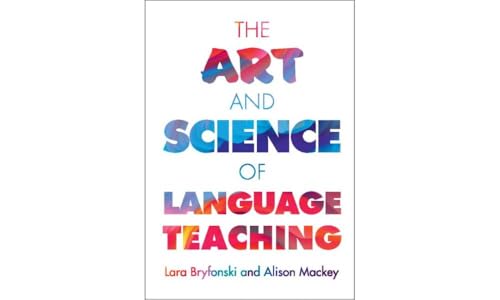
The art and science of language teaching / Lara Bryfonski, Alison Mackey.
Material type: TextPublisher: Cambridge, United Kingdom ; New York, NY : Cambridge University Press, 2023Description: 357pContent type:
 - text
- unmediated
- volume
- 9781108932011
- 407.1 BRY M 23/eng/20230725
| Cover image | Item type | Current library | Home library | Collection | Shelving location | Call number | Materials specified | Vol info | URL | Copy number | Status | Notes | Date due | Barcode | Item holds | Item hold queue priority | Course reserves | |
|---|---|---|---|---|---|---|---|---|---|---|---|---|---|---|---|---|---|---|
| Reference text books | All India Institute of Speech and Hearing | R-16/2 | 407.1 BRY M (Browse shelf(Opens below)) | Available | 24022 |
Includes bibliographical references and index.
Frontmatter
Part I - Teacher and Student Talk
pp 1-74
1 - How do I get my learners to start and stay talking in the second language?
pp 3-21
2 - How do I maximize input in the second language?
pp 22-33
3 - Why, when, and how (much) should I correct my learners?
pp 34-47
4 - How do I promote peer interaction in the classroom?
pp 48-62
5 - What kinds of learning strategies can I teach my learners?
pp 63-74
Part II - Differentiation
pp 75-150
6 - How does language learner identity influence the language learning experience?
pp 77-92
7 - How do I best support neurodiverse language learners?
pp 93-106
8 - How do learners’ motivation and anxiety levels impact their language learning experience?
pp 107-122
9 - How can aptitude be leveraged for language learning?
pp 123-135
10 - It’s much harder to learn (and teach) my language compared to other languages, and it takes much longer. How can I compensate for these difficulties with my learners?
pp 136-150
Part III - Teaching the Skills
pp 151-230
11 - How or when should I teach grammar?
pp 153-166
12 - Is there a “best” way to teach pronunciation?
pp 167-181
13 - How can I incorporate literacy skills in the target language?
pp 182-198
14 - When or how should I teach vocabulary?
pp 199-216
15 - What are some strategies for teaching learners about politeness, register, or other pragmatic skills in the second language?
pp 217-230
Part IV - Lesson and Unit Planning
pp 231-330
16 - What are some of the most popular language teaching methods?
pp 233-248
17 - Content, form, and activities: How do I select activities, tasks, and projects?
pp 249-265
18 - Menus and maps: How can I make my classroom more authentic in terms of materials and practices?
pp 266-282
19 - How could/should I best use technology in the language classroom?
pp 283-296
20 - How do I assess language learning?
pp 297-317
21 - How can I make the most of professional development opportunities for language teachers?
pp 318-330
Glossary
pp 331-336
References and Resources
pp 337-354
Index
pp 355-358
"Designed for language teachers of all levels and languages who seek to inform their classroom practices with current research findings on second language acquisition, this user-friendly book can be used in education courses, professional development training, and workshops"-- Provided by publisher.
There are no comments on this title.